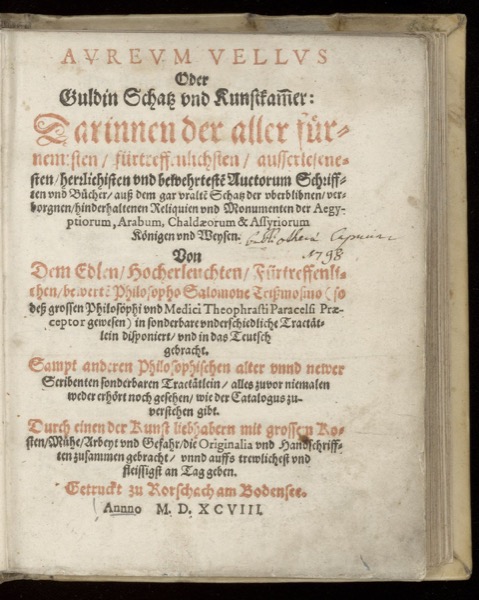
245TitleAureum vellus, oder Guldin Schatz und Kunstkammer
100AuthorTrismosin, Salomon
008Date1598
041LanguageGerman
650SubjectsAlchemy
The library reads, translates, describes and links itself. Your team keeps full control: they check what matters, correct what needs it, and decide what goes live, within the roles you set. Every edit is logged and can be rolled back.
Looking after the pages around it? See Managing your website.
Books, pages, plates, people and places are records your team can edit. They are filled from the catalogue you already have, and kept linked to each other automatically.
Send a MARC, Dublin Core or spreadsheet export and each value lands in the right field, with a note of where it came from.
245100008041650People and places in the text are recognised and joined to their own records, so one name leads to every book it appears in.
Add scans and a record. Each book is read, translated and described on its own, and lands in your team’s queue ready to check.



Every page is transcribed and translated for you, even in difficult hands. Your team’s time goes to the few readings the system is unsure of, and nothing goes live until the right person approves it.
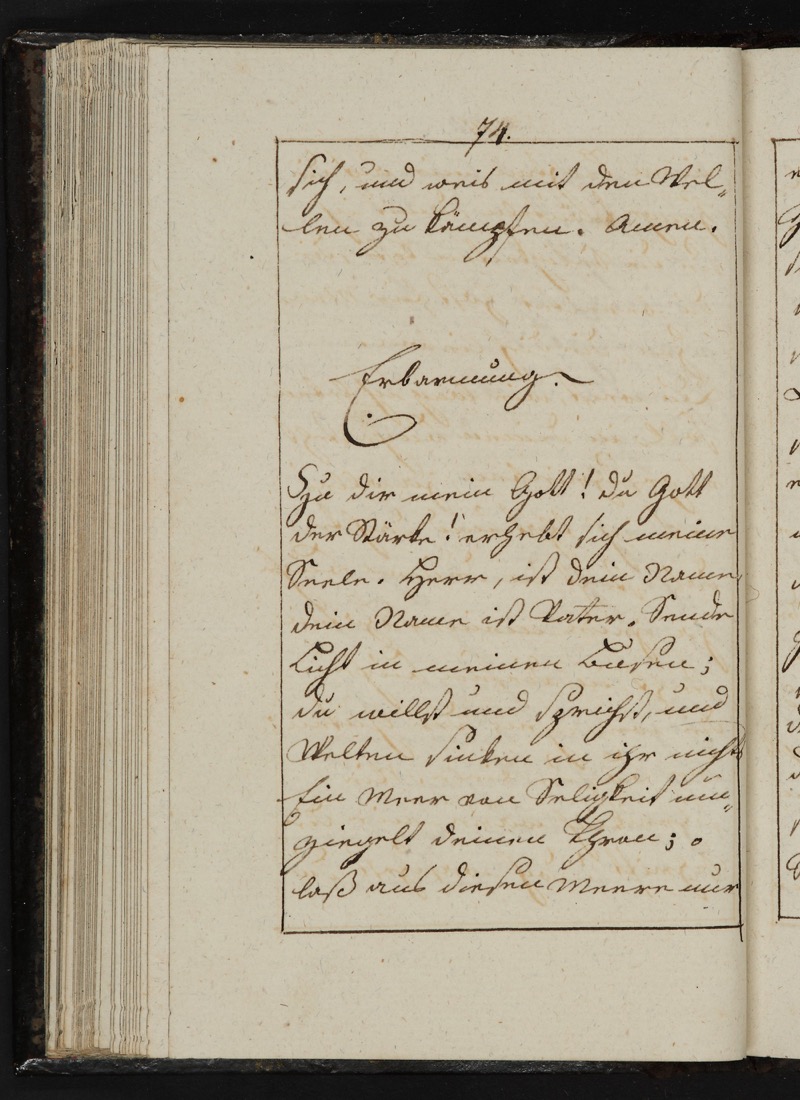
This is Kurrent, the old German script. Lines read with high confidence are done; the one uncertain line is flagged for someone who reads the hand.
Across the whole library, the queue holds just the readings that need a person, sorted so the hardest come first.
A change can wait for a second pair of eyes. The approver sees both versions side by side and says yes.
Plates are picked out of the pages, described and tagged automatically, so they can be searched by what they show. Your team edits any of it, and adds what only they know.
Each plate keeps its place in the book and gets a record of its own. Change a word, add a tag, and search picks it up.

A list of books for an exhibition, a theme, a course or a donor, with suggestions from the library as you build it. The same list becomes a shelf, a feature or a chronology anywhere on the site.
Accept a suggestion and every shelf and feature built on the collection follows. A collection can stay private until it is ready.





Every member of the library team has a role and a scope, from the head librarian who signs off to a volunteer working on one manuscript. And every collection has its own visibility, from fully public to named researchers only.
Cataloguers edit records, librarians check text, the head librarian approves. A volunteer can be given a single book and nothing else.
| Person | Role | Works on | Changes |
|---|---|---|---|
| JJo MarshApproves library changes | Head librarian | Whole library | Publish directly |
| AAnna BergReads Latin, German, Kurrent | Librarian | Whole library | Need approval |
| PPieter LaanCatalogue records | Cataloguer | Records · not text | Need approval |
| KKim NoorVolunteer | Transcriber | Book of Hours, 1491Book of Hours + Rosary | Need approval |
| MDr. M. VosVisiting researcher | Researcher | Restricted items · read only | None |
Each book or collection can be public, open to signed-in readers, staff only, or limited to named researchers. Restricted items stay out of search, components and exports for everyone else.
 Book of Hours, 1491ManuscriptPublicReadersStaff
 True Keys of SolomonFrench manuscript, 1750PublicReadersStaff
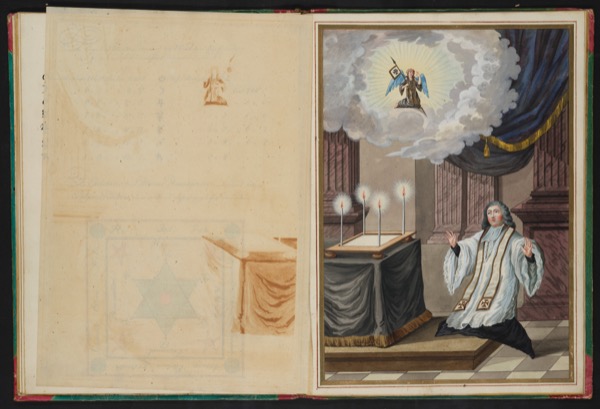 Holy Almodel of SolomonLatin manuscript, 18th c.PublicReadersNamed
 Rosary of the PhilosophersManuscript, c. 1600PublicReadersStaff
Who opened a restricted book, who changed a record, who approved it. The activity log is there for your team, and for your auditors.
Each change is logged with who made it and when, and your team can restore an earlier version themselves. The whole library can be exported in open formats at any time.
Look back over a record’s history and restore an earlier version without asking us. The restore is logged too.
Scans, records, transcriptions, translations and your team’s notes belong to you, in standards other systems already read.
The pages around the collection: who can edit what, templates for new pages, and library components anywhere on the site.